« May 2013 »
May
Mo Tu We Th Fr Sa Su
1 2 3 4 5
6 7 8 9 10 11 12
13 14 15 16 17 18 19
20 21 22 23 24 25 26
27 28 29 30 31

Events calendar

Today

RMCA
Leuvensesteenweg 13
3080 Tervuren - Belgium
Tel. (+32) 02 769 52 11
Fax (+32) 02 769 52 42

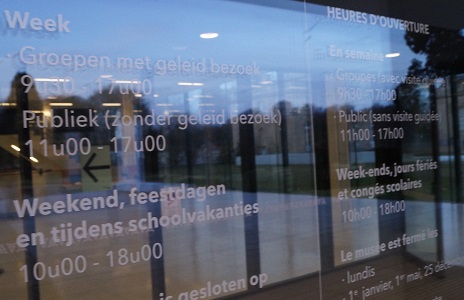
Opening hours museum
Tuesday through Friday *:
from 10 a.m. until 5 p.m.
Saturday & Sunday *:
from 10 a.m. until 6 p.m.
*even if public holiday

Closed
Every Monday (even if public holiday)
On 1 January, 1 May  and 25 December
On 24 and 31 December as from 3 p.m. on


2. Central Africa Ethnography hall


The museum’s ethnographic collection is accommodated in three different halls. This hall dates from the early 20th century when the common scientific notion was to show the objects per region

gleuftrom
Zoomorphic split drum
 

This slit or split drum is almost a hundred years old and was first and foremost used to convey messages.

The drum is carved from one tree trunk. Two sides with different thicknesses produce different sounds.
Bantu languages are tone languages. The drummer can convert words and even complete sentences into drum rhythms. In some tribes from the north of Congo it is customary to make drums in the form of an animal (zoomorphic), for instance crocodiles or buffalo.
This drum is attributed to the LOI and represents a stylised antelope.


p-europstoel
 
European chair
 

Many African tribes use traditional stools as chairs, cut from one solid piece of wood.
The TSHOKWE presumably copied this chair from a model that was common in 17th century Portugal. The chair’s design is therefore in a sense ‘European’, but the TSHOKWE adapted the material and sculptural details to their tradition.
The TSHOKWE use chairs as a symbol of authority that represent -among others- highlights in the chief’s life or scenes from his direct environment.


kariatidestoel
 
Kariatide chair
 

This nicely sculpted Kariatide chair is made of one solid piece of wood.
As in many African tribes, for the LUBA, seating is the main symbol of kingship. The royal palace is called the ‘seat of power’ (kitenta) and sitting is a metaphor of the social hierarchy.

This chair is unique because of the texture-rich, sculpted surface. It displays cosmetic elements like scar tattoos, which are believed to increase beauty and erotic pleasure.


Document Actions