Staff directory

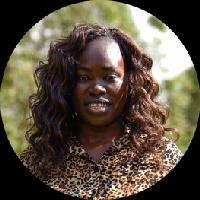
Mercy Ashepet

Information
Mercy Gloria Ashepet
Department: Earth Sciences
Division: Natural hazards and Cartography
Job Title: Social biologist
Specialisms: citizen science, snail-borne diseases, natural harzard, surveys, Focus group discussions
Email: mercy.ashepet@africamuseum.be
Education

01/10/2019-07/10/2024

PhD
Royal Museum for Central Africa
KU Leuven, Department of Earth and Environmental Science, Division of Bioeconomics


12/10/2016-15/09/2018

Master of Science in Biology-specialization Human Ecology. Great distinction.
Vrije Universiteit Brussels, Brussels (Belgium)


01/08/2011-30/05/2014

Bachelor of Biological Science
Makerere University, Department of Zoology, Entomology and Fisheries, Kampala (Uganda)
Botany, Zoology (major)

Career

January 2024 - present: Scientific collaborator in the Department of Biology at the Royal Museum for Central Africa, Tervuren Belgium.

August 2021 - June 2022: Co-coach for a decolonise (Knowledge on) Nature challenge in collaboration with the Royal Museum for Central Africa and KU Leuven.

Febuary - September 2019: Scientific assistant in the Department of Biology at the Royal Museum for Central Africa, Tervuren Belgium.

July 2013 - March 2014: Research assistant with Geo-Taxon Consult Limited, Kampala Uganda.

Awards

2016-2018: VLIROUS ICP Connect MSc Scholarship.

2019-2024: RMCA-DGD framework for PhD support.

2025: HEAL project funded by the DIORAPHTE foundation

Conferences

Ashepet, M.G., Jacobs, L., Huyse, T., Michellier, C., and Vranken, L. "Assessing the motivational factors of citizen science participants in a snail monitoring network in South-West Uganda (e-poster)". The 15th series of International Congresses of Parasitology – ICOPA, 2022.

Ashepet, M. G., Mulmi, J., Pype, K., DeBethel, J., Madinga, J., and Huyse, T. "Multidisciplinary approaches to the involvement and motivation of citizen scientists in research on disease vector monitoring in Uganda and DRC". The 4th European Citizen Science Association (ECSA) conference, 2022.

Ashepet, M.G., and Huyse, T. "Involving citizens in snail monitoring & community mobilisation towards the prevention of snail-borne diseases: lessons from Uganda & DRC". The 13th European Congress on Global Health (ECTMIH), 2023.

Ashepet, M.G., Huyse, T., Jacobs, L., Anyolitho, M. K., Nyakato, V., Wingerinck, B., Vranken, L., and Michellier, C."Can citizen science-generated data induce policy changes? Insights from policy actors in Uganda".The 5th European Citizen Science Association (ECSA) conference, 2024. https://2024.ecsa.ngo/

Dissertations

BSc thesis (May 2014, MUK): "Prevalence of helminth parasites in cattle slaughtered at the city abattoir, Kampala". Promoter: Dr. Innocent Rwego.

MSc thesis (September 2018, VUB): "Dynamics of Human-Crocodile conflicts around Murchison Falls Conservation Area, Uganda". Promoters: Prof. Jean Hugé and Prof. Farid Dahdouh-Guebas.

PhD thesis (October 2024, KU Leuven): "Citizen Science in the Global South: motivational frameworks and policymaker perspectives. Case-study on citizen science for natural risk management and vector-borne disease reduction in Uganda". Promoters: Prof. Liesbet Vranken, Dr. Tine Huyse, Dr. Caroline Michellier, Prof. Liesbet Jacobs and Prof. Grace Kagoror-Rugunda.

Research

I am an interdisciplinary expert and scientific collabortaor at the Royal museum for central africa. I completed my doctroal training at the KU leuven where my research focused on the application and potential of citizen science in low- and middle-income countries. Before pursuing my PhD, I trained as a biologist at both Makerere University in Uganda and Vrije Universiteit Brussels in Belgium. My training as a biologist gave me a strong foundation in field-based research and applied biological sciences, equipping me with the tools to study ecosystems, biodiversity, and environmental health. However, being from a developing country, I recognized early on that the challenges faced by such regions often cannot be addressed through a narrow focus on scientific or environmental disciplines alone.

As such, I became increasingly interested in interdisciplinary research in a bid to address societal and environmental challenges in a more holistic way. I believe that citizen science has significant potential as one such solution, offering all round benefits. However, in resource constrained regions like Uganda, challenges like limited funding, lack of infrastructure, and competing social and economic needs often make it difficult to implement effective citizen science intiatives. My primary research focus is therefore on understanding how to maximize the impact of citizen science in such regions. So far, we have developed a framework of guiding priciples for citizen science in low and middle contries, building on the 'ten principles of citizen science' established by the European Citizen Science Association. Additionally, we have proposed pathways to build trust in citizen science-generated data, ensuring that the insights gathered through citizen science can be effectively integrated into decision-making processes. A luta continua!

Links:
https://www.youtube.com/watch?v=pYWOw74cOD4
https://www.youtube.com/watch?v=wELi6v8xiRI
https://www.youtube.com/watch?v=mfZxYah20Ns