
Three years of ENFORCE
ENFORCE, the Belgian Center of Expertise for Forensic Wood Research, is celebrating its third anniversary. What exactly does the work involve, and what are the successes and challenges? Follow researcher Michael Monnoye during a typical day in the timber analysis laboratory at the AfricaMuseum.

Belgium is a major hub in the international timber trade. This is mainly via the port of Antwerp, which serves as a gateway for the enormous quantities of solid timber, plywood sheets, wooden furniture and much more that are imported into the European Union. However, timber shipments cannot simply be traded without restriction. Limitless exploitation over the past centuries has put many timber species and forests at risk. This continues to this day, particularly in tropical regions.
That is why international legislation such as the Convention on International Trade in Endangered Species (CITES) and the EU Timber Regulation (EUTR) are in force to protect species and forests worldwide. These regulations impose conditions or restrictions on the harvesting and trade of timber. However, legislation requires monitoring, which means there is a need to verify timber entering Europe via Belgium. The timber species must be correctly declared, not only for solid timber but also for processed products.
To this end, the Belgian Center of Expertise for Forensic Wood Research (ENFORCE) was launched in November 2022. The first main objective was to make the expertise of the wood biologists at the Royal Museum for Central Africa available through expert assessments for government bodies, companies and other stakeholders. This had previously been done on an ad hoc basis, but this work has now been streamlined and has become one of the core activities of the Wood Biology Department. The second main objective was to expand and improve the methodology for wood identification.
Researcher Michael Monnoye introduces us to the working methods of the ENFORCE laboratory.
Let’s start at the beginning. How do you identify a piece of wood?
The most versatile method is the analysis of wood anatomy, that is, the shape and orientation of the wood cells within the wood. We begin with a macroscopic and microscopic examination of the wood anatomy. This usually allows us to determine the genus of the wood.
This piece of wood has just been sent to us by a company for analysis. They want the species confirmed. By examining it and comparing it with reference material, I can see that this sample is Afzelia wood, a tropical genus, but I cannot say exactly which species of Afzelia it is. The mass spectrometer will help us further.
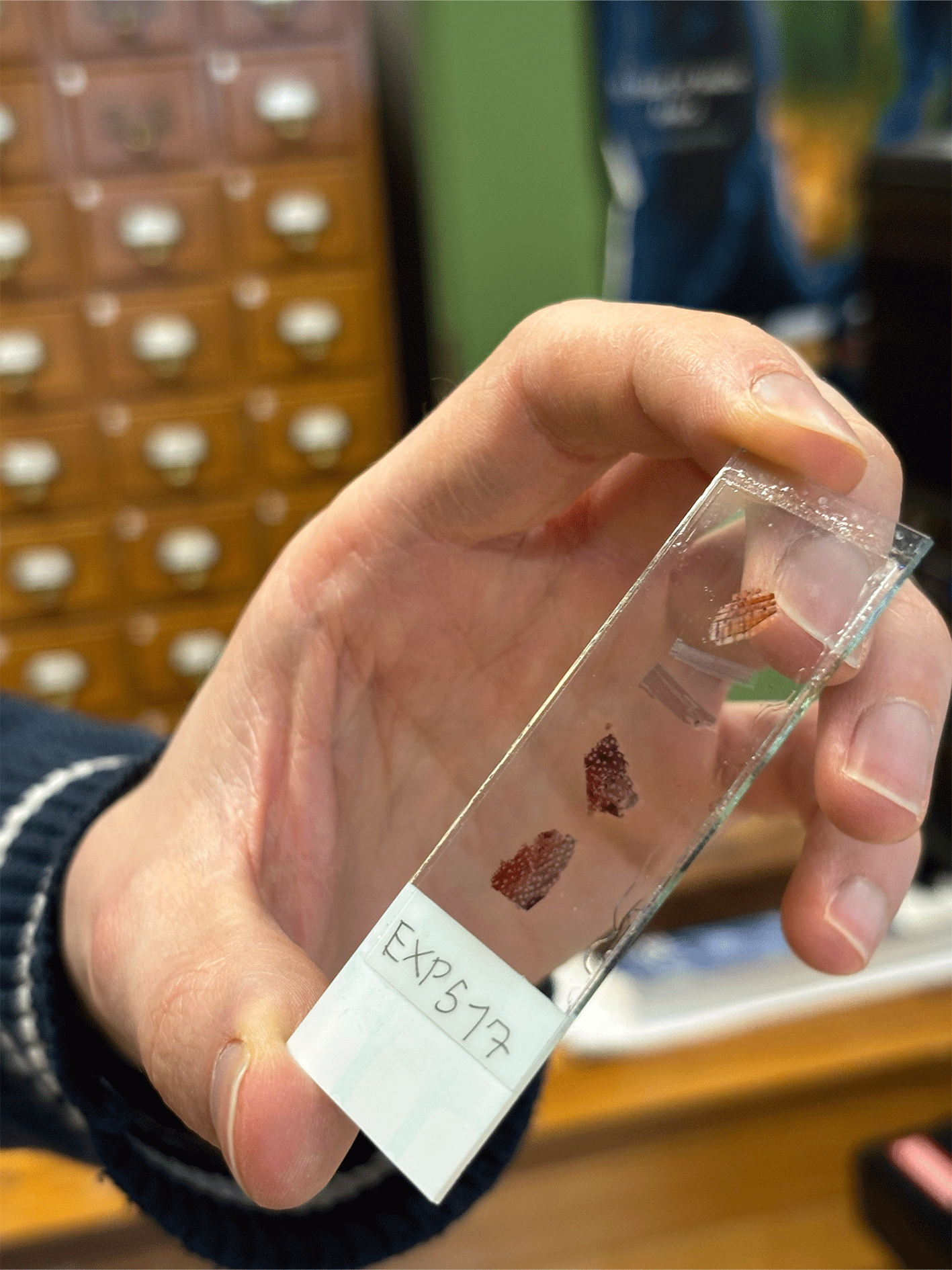
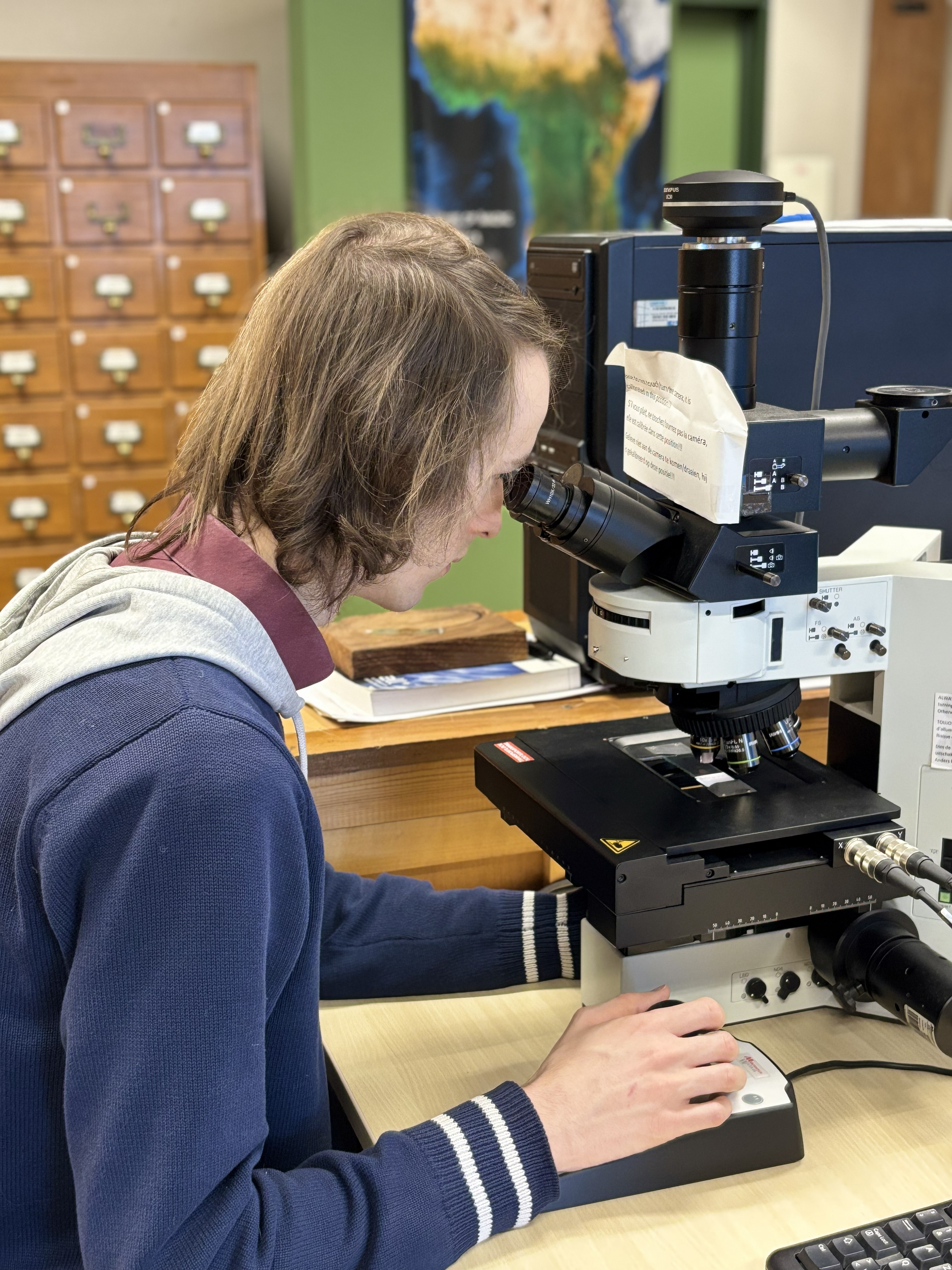
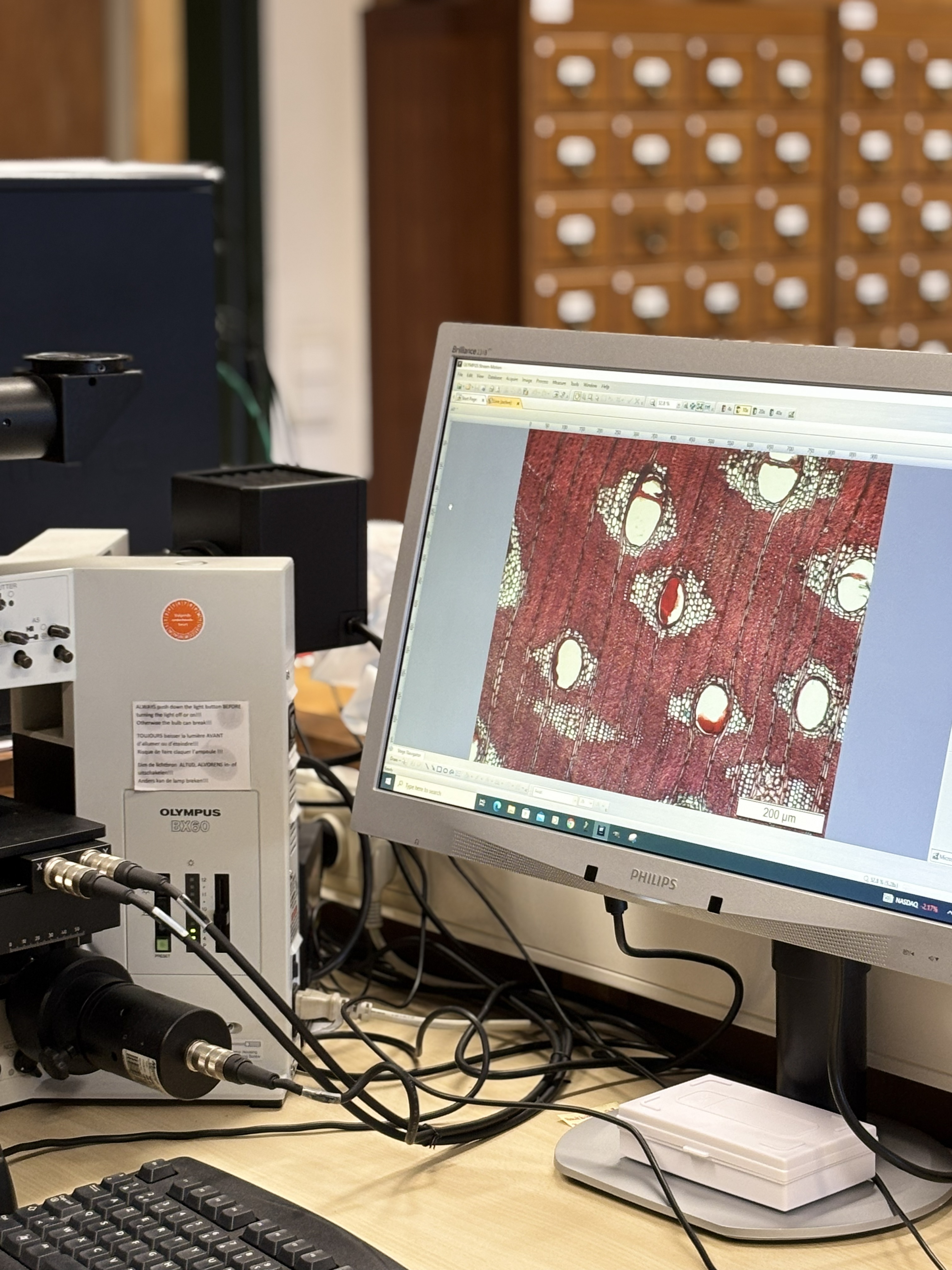
Michael is examining a thin section of the EXP517 wood sample under a microscope.
Could you explain how the mass spectrometer works?
It takes the chemical fingerprint of the wood. Let’s take the same EXP517 sample that we’ve just examined under the microscope. The spectrometer measures the chemical compounds present in the sample. This produces a spectrum that reflects the wood’s signature. This spectrum differs between various types of wood.
What exactly does the machine measure?
It measures the molecules in the wood. The machine blows a hot jet of ionised helium gas over the wood sample. This causes tiny chemical compounds – such as metabolites – to become electrically charged and fly into the machine. The spectrometer detects each one and records their intensity. On the screen, you can see this as sharp peaks in the spectrum.
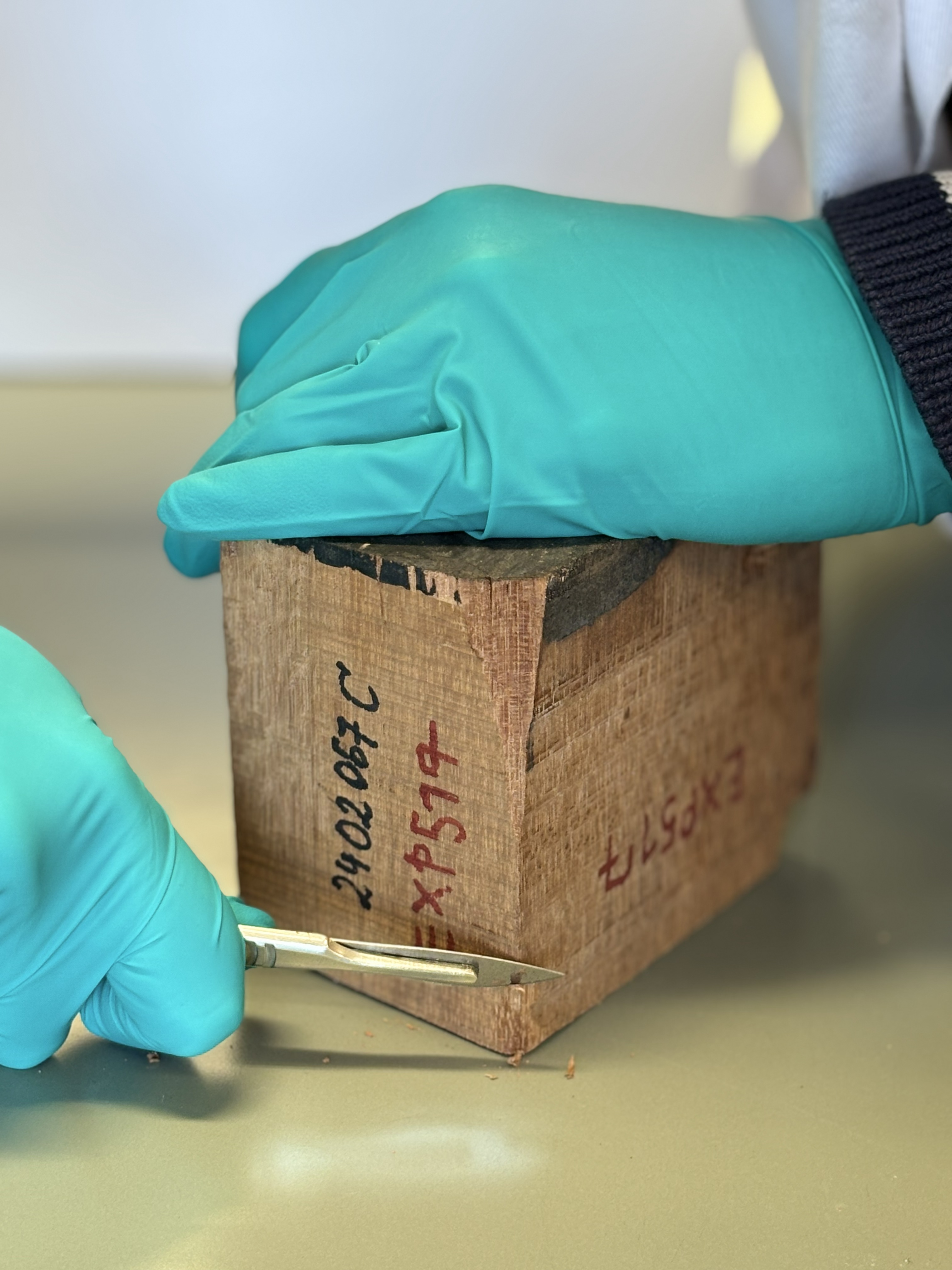
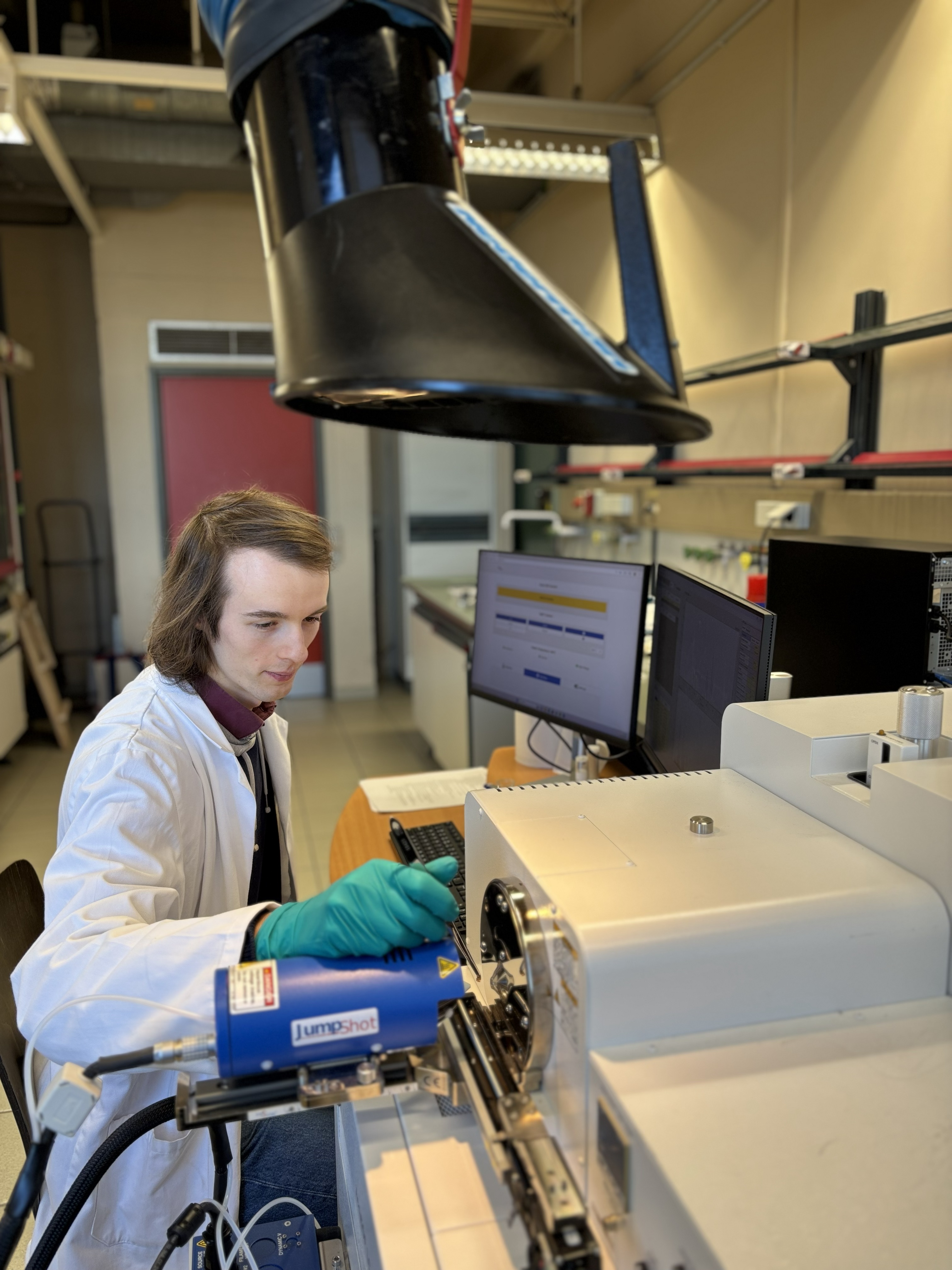
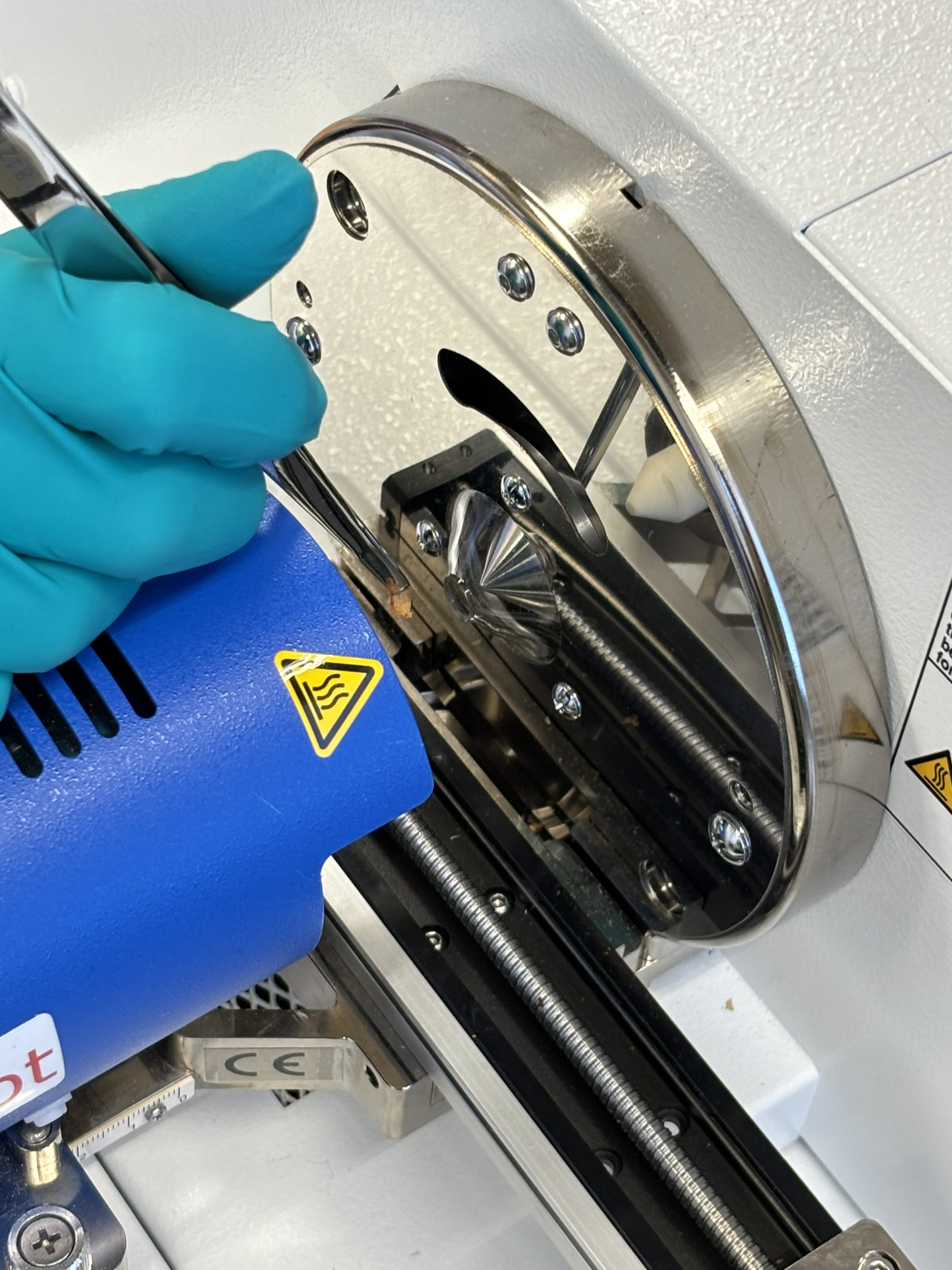
Michael cuts away a small piece of wood with a scalpel. He then places this piece in the mass spectrometer for analysis.
How do you interpret these peaks?
The machine does the work. All the peaks together form the chemical spectrum of this piece of wood. I can now compare this visually or using statistical analysis against a large reference database. This database is the result of an international collaboration and consists of more than 13,000 spectra. This ensures accurate identification of the wood species. The company wanted to know which species of Afzelia it was. Now we know: this is Afzelia bipindensis.
I would, however, like to point out that for species for which no reference spectrum is available, the analysis of wood anatomy via microscopy remains the most important investigative method.
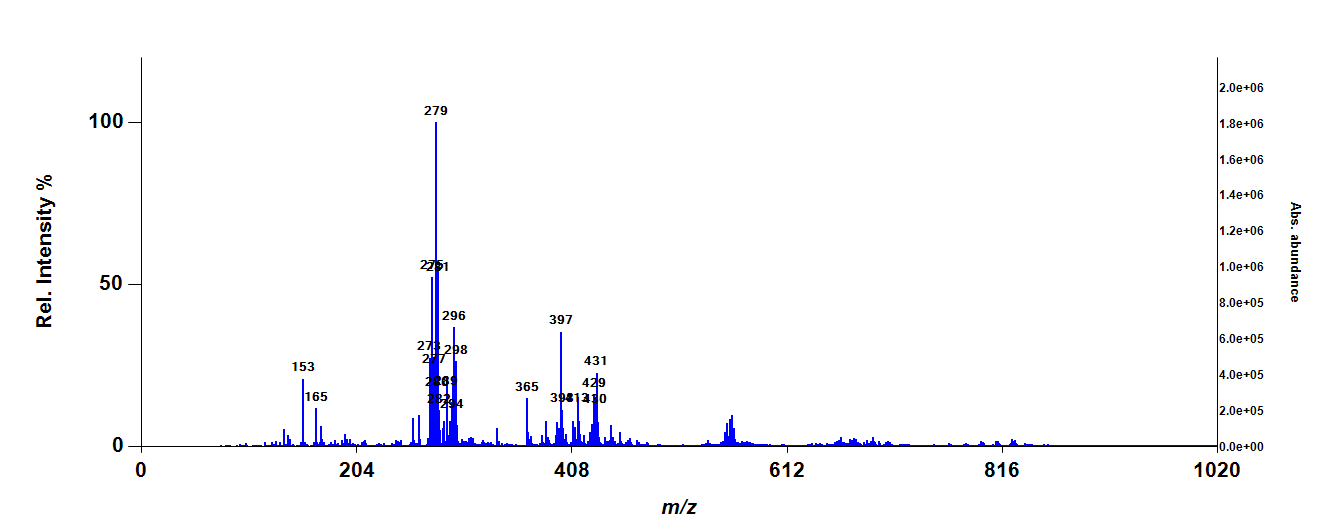
The chemical spectrum of Afzelia bipidensis
How many expertises are you currently carrying out, and who commissions them?
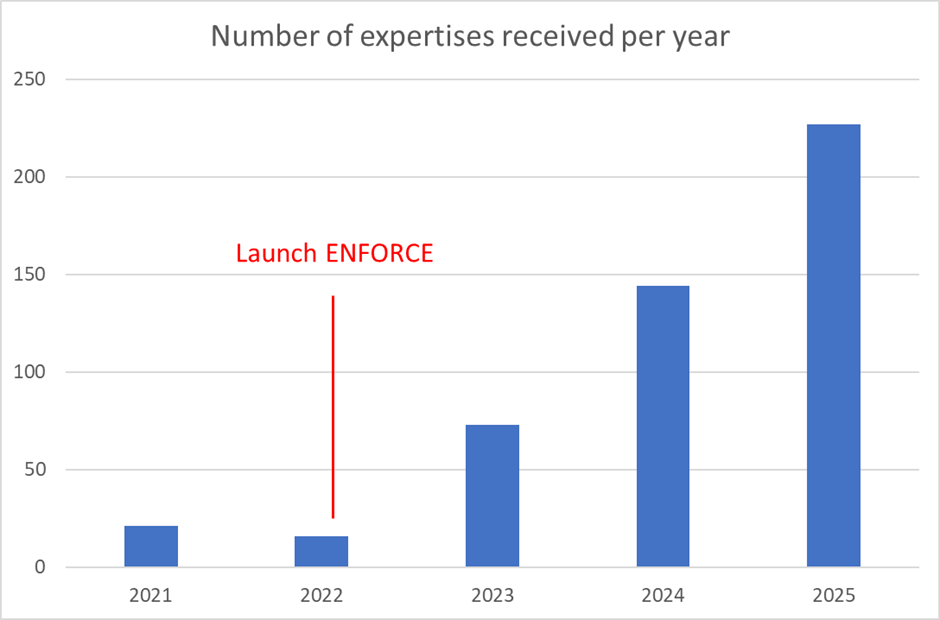
Over the past three years, the number of expertises has increased significantly: from just 16 in 2022 to as many as 227 in 2025. This is partly due to ENFORCE’s growing reputation among inspection services and timber importers, and partly due to the increased number of timber inspections carried out by the FPS Environment in connection with the upcoming EU Deforestation Regulation (EUDR), the EU’s new legislation on timber imports. The FPS indicates that in 2025, 90% of the cases processed in Belgium did not meet the requirements².
Private companies are also beginning to take the necessary steps in this regard, with timber importers using ENFORCE’s services to monitor their own supply chain right from the forest where the timber is harvested.
How has your work changed since 2022?
Not only has the number of expert assessments increased, but the complexity of the products investigated is also on the rise. Whereas in 2022 and previously it was mainly solid wood and occasionally a splinter from an art object that was identified, many more products are now being analysed: plywood, veneer, chipboard, fibreboard, paper and furniture consisting of a mix of products. For this, wood anatomy is still the best method because it is not affected by contamination.
What does this mean for the future of ENFORCE?
Given that the upcoming EUDR is not yet fully in force and the range of timber products is constantly expanding, challenges will continue to arise. It will therefore be essential to continue investing in manpower and technology to ensure adequate monitoring of the timber trade.
More science news

What does the museum show, and what remains out of sight? This carefully put-together, temporary installation of museum labels (‘cartels’ in French) brings together around fifteen texts written by authors with diverse backgrounds including activism, art, research or museum outreach. The installation highlights the tensions and dissonances between the museum presentation, the silences and absences it perpetuates, and the infinite voices that exist outside institutional discourse.

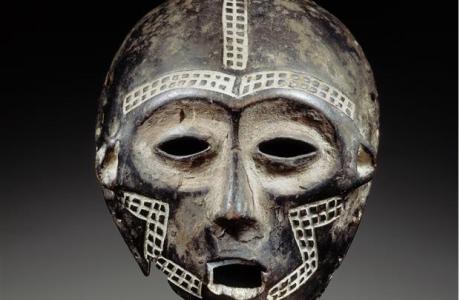
Our heritage story is part of the Heritage Tombola! The Tshokwe Cihongo mask has been selected as one of the twelve finalists in the running for a restoration grant of up to €150,000.
From 15 September, anyone can vote for their favourite story for free. Anyone who votes will also be automatically entered into a prize draw for some great prizes via the Heritage Tombola.
Support us with your vote at www.erfgoedtombola.be
On 6 February 2026, the PROCHE project organised a workshop bringing together researchers, experts and members of civil society to formulate recommendations for the future of institutional provenance research in Belgium and the Democratic Republic of Congo. The following day, 7 February, these recommendations were discussed at an open forum attended by institutional partners, the University of Kinshasa and the Institute of National Museums of Congo. This exchange provided an opportunity to present the proposals to the public, gather critical feedback and collectively enrich the discussion.